
Acrylic Nail Care: Fills, Aftercare, and Making a Set Last
Short answer
Acrylic nail care comes down to four habits: get a fill every 2 to 3 weeks, apply cuticle oil every day, wear gloves for dishes and cleaning, and never peel or pry a nail off. Do those four things and most sets last the full 2 to 3 weeks between fills without lifting or breaking. Skip fills past 3 weeks and even a perfect set starts to lift at the cuticle, because the natural nail has grown out and changed the balance of the enhancement.
This guide covers the fill cycle, daily aftercare, lifting prevention, break repair, safe removal, and the warning signs that mean “see a professional” instead of fixing it at home. It is general information, not medical advice.
The fill cycle: what happens and when
In acrylic nail care, a fill is not a new set. Your technician files down the grown-out area near the cuticle, fills the gap with fresh acrylic, rebalances the shape, and finishes with polish or a top coat. A fill appointment usually takes 45 to 60 minutes, compared with 90 minutes to 2 hours for a full set.
The standard schedule:
- Every 2 to 3 weeks: book a fill. This is the single most important care rule.
- After 3 to 4 fills: ask your technician whether the set should be soaked off and replaced with a fresh set. Built-up product gets thick, heavy, and harder to balance, and a fresh set resets the structure.
- Every 6 to 9 months: most people who wear acrylics continuously will have had at least one full replacement by this point, even with regular fills.
Waiting longer than 3 weeks between fills is the most common cause of lifting and breakage. The longer the gap at the cuticle, the more leverage every tap and knock puts on the nail, and the more chance moisture gets trapped under a lifted edge. The full fill explainer — what happens step by step and when a fresh set makes more sense — is in Acrylic Nail Fill.
If you are deciding between acrylics and gel before your first set, the wear and fill differences are compared in Acrylic vs Gel Nails.
Daily Acrylic Nail Care (5 minutes a day)
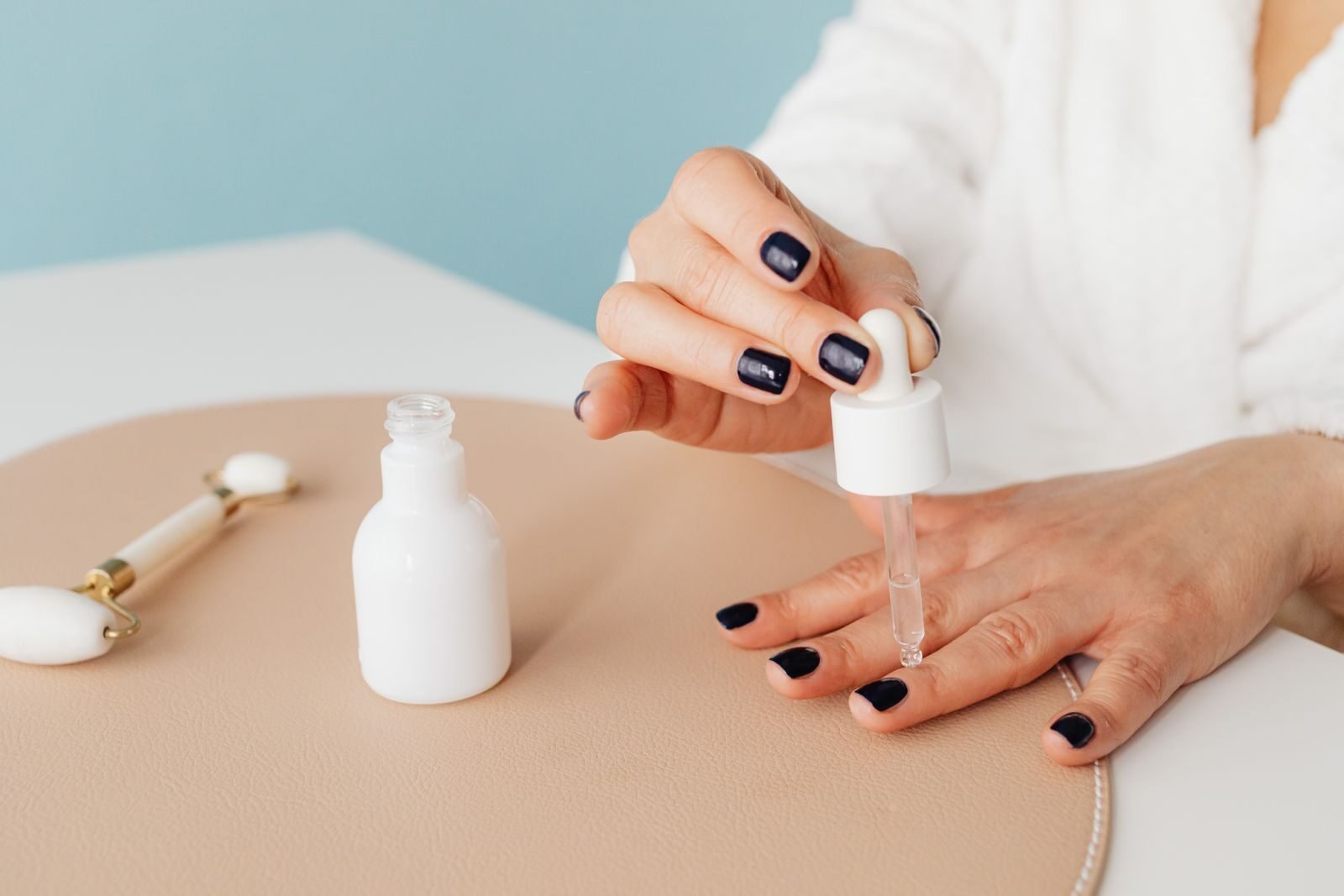
Cuticle oil, every day. Apply 1 drop per nail, massage it into the cuticle and the skin around the nail, morning and night if you can, once a day at minimum. Oil keeps the skin flexible and the acrylic from drying out and lifting. Dry cuticles crack, and cracked skin around a nail is where hangnails and lifting start.
Gloves for wet work. Wear gloves for washing dishes, cleaning with chemicals, and gardening. Prolonged water exposure softens acrylic and weakens the bond, and cleaning chemicals dry out both the nail and the skin. Keep a pair of gloves by the sink so the habit is easy.
Top-coat refresh every 3 to 4 days. One thin coat of top coat over the whole nail, including sealing the free edge, keeps shine up and protects colour — white and pastel sets especially. This takes 2 minutes for 10 nails and is the difference between a set that looks fresh at week 2 and one that looks tired.
Hands, not tools. Never use nails to open cans, scrape stickers, pry lids, or push buttons with the nail tip. Use finger pads for typing and touchscreens. One lever action on a long nail can crack the whole enhancement at the stress point.
Keep nails clean and dry. Wash hands normally, dry them fully afterwards, and clean gently under the free edge with a soft nail brush if needed. Do not dig under the nail with a sharp tool — that lifts the enhancement from underneath.
Preventing lifting (the problem behind most breakage)
In acrylic nail care, lifting means the acrylic has separated from the natural nail, usually starting at the cuticle or a sidewall. Once lifted, the gap traps moisture, and the lifted edge catches on everything. Prevent it at the source:
- Never skip fills past 3 weeks. Regrowth changes the balance; balance loss causes lifting.
- Keep product off skin. This is set at application — product on the cuticle lifts as skin moves. If your technician floods the cuticle, say so.
- Moisturize daily. Dry acrylic is brittle acrylic.
- Do not pick at a lifted edge. Picking widens the gap. File the lifted edge smooth so it cannot catch, and book a repair or fill within a few days.
- Avoid harsh chemicals on bare nails. Acetone-based polish remover on top of acrylics, strong solvents, and undiluted cleaning products all attack the bond.
If a nail has lifted badly, smells unusual, or shows green or dark discolouration underneath, do not cover it with polish and hope. Remove that nail properly and see a nail professional promptly. This is general information only — a professional seeing the nail in person can judge what a guide cannot.
When a nail breaks
A break is different from lifting, and acrylic nail care treats them differently. If an acrylic cracks or snaps:
- Small crack, nail still attached: file the rough edge smooth, keep the nail short, and book a repair. Do not glue a cracked enhancement back together over a damaged natural nail.
- Break at the free edge: trim the sharp part carefully, file smooth, and protect the nail until your repair appointment. A broken nail is weaker until it is rebuilt.
- Break that is painful, bleeding, or exposes the natural nail bed: this is a technician-or-clinician job, not a home fix. Keep it clean, covered, and get it seen promptly.
Never use household superglue on a broken nail as a substitute for a proper repair. It is not made for nails, it seals in whatever is underneath, and removal later is harder.
Safe removal (never peel)
Peeling acrylics off pulls layers of the natural nail with it and leaves nails thin, sore, and peeling for weeks. The safe method takes 20 to 30 minutes:
- File the top coat and bulk of the acrylic down with a 100-grit file until thin.
- Soak a cotton pad in pure acetone, place it on the nail, and wrap tightly in foil. Repeat for all 10 nails.
- Wait 15 to 20 minutes. Do not unwrap early to check — rewrapping lets air in and slows the soak.
- Push the softened acrylic gently away with a cuticle pusher or orangewood stick. If it resists, rewrap for another 5 to 10 minutes.
- Buff lightly, wash hands, and apply cuticle oil and hand cream generously.
The step-by-step version with photos guidance is How to Remove Acrylic Nails Safely. After removal, give natural nails a rest of at least 1 to 2 weeks with daily oil before a new set, especially if they feel thin.
How long should you wear acrylics continuously?
With acrylic nail care done right — fills every 2 to 3 weeks and a fresh set every few months — many people wear acrylics continuously for years. The healthy version of “continuously” includes breaks: a short break every few months lets you check the natural nails underneath and rehydrate them. During a break, keep nails short, apply cuticle oil twice a day, and skip harsh polish removers.
Signs you need a break or a professional check, not another fill: persistent soreness, nails that feel paper-thin after removal, repeated lifting on the same nails, or any pain, swelling, or discolouration. Again, this guide is general information — it does not diagnose anything.
Acrylic Nail Care by Lifestyle
- Office and typing: short almond or short oval breaks least. Keep nails at a length where finger pads, not tips, hit the keys. See Short Acrylic Nails for lengths that suit desk work.
- Swimming and gym: rinse with clean water after swimming, dry fully, and add an extra top coat that week. Chlorine and long soaks dry acrylic out.
- Winter: cold air and indoor heating dry skin fast. Move cuticle oil to twice a day in winter and wear gloves outdoors, not just for chores.
- Weddings and events: book your fill 2 to 4 days before the event, not the morning of it, so any tiny fix has time to settle. Bridal ideas are in Wedding Acrylic Nails.
The Weekly Acrylic Nail Care Checklist
- Cuticle oil daily (twice daily in winter).
- Gloves for dishes, cleaning, and gardening.
- Top coat refresh every 3 to 4 days.
- No nails-as-tools all week.
- Fill booked before the 3-week mark.
- Any lifted edge filed smooth and booked for repair, not picked.
FAQ: Acrylic Nail Care
How often should I get acrylic fills?
Every 2 to 3 weeks. Past 3 weeks, lifting and breakage rise sharply.
How long do acrylic nails last between fills?
Most sets look good for 2 to 3 weeks with daily oil and gloves. Some people stretch to 4 weeks, but that increases lifting risk and is not recommended as a routine.
Can I fill my own acrylics at home?
Experienced DIY users can, but fills need the same prep discipline as a full set and a steady filing hand near the natural nail. Beginners should have fills done by a technician until application feels easy.
Why do my acrylics keep lifting at the cuticle?
The usual causes, in order: fills overdue, oil on the nail plate at application, product touching skin, or daily water and chemical exposure without gloves. Fix the schedule first, then the habits.
Is it bad to wear acrylics for years?
Not by itself, with fills on time, fresh sets every few months, and short breaks to check natural nail health. Problems come from skipped fills, peeling, and covering up warning signs — not from the acrylic itself.
What do I do if a nail lifts?
File the edge smooth so it cannot catch, keep it clean and dry, and book a repair within a few days. Do not glue it down over the gap or pick at it.
Save this idea
Save this acrylic nail care guide next to your fill appointment: oil daily, gloves always, top coat every few days, fills every 2 to 3 weeks. Four habits, and your set does the rest.
Featured image for acrylic nail care: Woman applying oil to cuticles photograph by Kaboompics on Pexels.